



- 05 Sep 2023
- Book
Thriving After Failing: How to Turn Your Setbacks Into Triumphs
When we slip up, we are often filled with shame, and our instinct is to hide. Instead, people and businesses should applaud smart risk-taking, even when things don't work out, and closely examine their failures to learn from them, says Amy Edmondson.

- 05 Sep 2023
- Book
Failing Well: How Your ‘Intelligent Failure’ Unlocks Your Full Potential
We tend to avoid failure at all costs. But our smarter missteps are worthwhile because they can force us to take a different path that points us toward personal and professional success, says Amy Edmondson.

- 14 Jun 2023
- Research & Ideas
Four Steps to Building the Psychological Safety That High-Performing Teams Need
Struggling to spark strategic risk-taking and creative thinking? In the post-pandemic workplace, teams need psychological safety more than ever, and a new analysis by Amy Edmondson highlights the best ways to nurture it.

- 22 Mar 2021
- Research & Ideas
How to Learn from the Big Mistake You Almost Make
A brush with disaster can lead to important innovations, but only if employees have the psychological safety to reflect on these close calls, says research by Amy C. Edmondson, Olivia Jung, and colleagues. Open for comment; 0 Comments.

- 22 May 2020
- In Practice
Post-COVID Health Care: More Screens, Less Red Tape?
The coronavirus pandemic might lead to major changes in patient care, physician compensation, and regulation. Experts from Harvard Business School's Health Care Initiative share their predictions. Open for comment; 0 Comments.
- 02 Mar 2020
- What Do You Think?
Are Candor, Humility, and Trust Making a Comeback?
SUMMING UP: Have core leadership values been declining in recent years? If so, how do we get them back? James Heskett's readers provide answers. Open for comment; 0 Comments.

- 17 Sep 2019
- Cold Call Podcast
How a New Leader Broke Through a Culture of Accuse, Blame, and Criticize
Children’s Hospital & Clinics COO Julie Morath sets out to change the culture by instituting a policy of blameless reporting, which encourages employees to report anything that goes wrong or seems substandard, without fear of reprisal. Professor Amy Edmondson discusses getting an organization into the “High Performance Zone.” Open for comment; 0 Comments.
- 11 Jun 2019
- Book
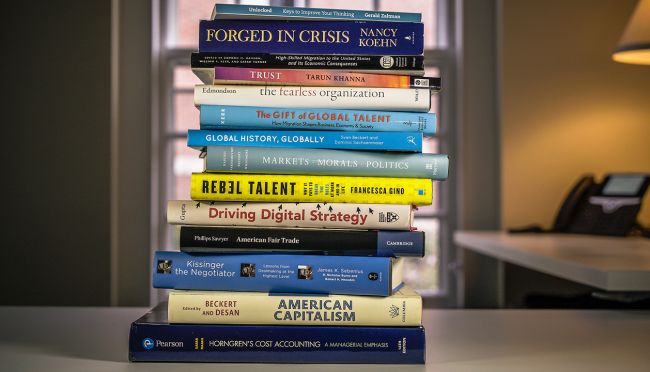
These Aren't Beach Books, but Managers Should Read Them Anyway
As you contemplate your summer reading, consider these recent books from Harvard Business School management scholars that can boost your career and improve on-the-ground management skills. Open for comment; 0 Comments.

- 06 May 2019
- Research & Ideas
Consumers Blame Business for Global Health Problems. Can Business Become the Solution?
Millions of people have been harmed by cigarettes, defective merchandise, pollution, addiction and other business by-products. now, pioneering companies are exploring healthier ways to operate, say Amy C. Edmondson and Dr. Howard K. Koh. Open for comment; 0 Comments.
- 27 Dec 2018
- Working Paper Summaries
Team Learning Capabilities: A Meso Model of Sustained Innovation and Superior Firm Performance
In strategic management research, the dynamic capabilities framework enables a “helicopter view” of how firms achieve sustainable competitive advantage. This paper focuses on the critical role of work teams, arguing that managers must leverage the knowledge generated by teams to support innovation and strategic change. It matches types of team learning to innovation activities.

- 26 Nov 2018
- Book
Make Your Employees Feel Psychologically Safe
To do their best work, people need to feel secure and safe in their workplace. In a new book, Amy C. Edmondson details how companies can develop psychological safety. Open for comment; 0 Comments.

- 19 Jun 2018
- Research Event
Has Environmental Sustainability Lost its Relevance?
Companies have thought for decades about business-focused solutions to fix the deteriorating environment. But judging by continually rising waters and temperatures, we may need a rethink about what sustainability means, suggest participants at a recent conference at Harvard Business School. A report by co-organizer Geoffrey Jones. Open for comment; 0 Comments.

- 29 Jan 2018
- Book
How 'Teaming' Saved 33 Lives in the Chilean Mining Disaster
Teams composed of people from across expertise areas can create solutions beyond what any one agency can deliver, says Amy Edmondson. Just ask several dozen Chilean workers rescued from a mine collapse. Open for comment; 0 Comments.

- 03 Oct 2017
- Sharpening Your Skills
7 Effective Ways to Lead Teams
Managers of teams require communications skills, organizational capabilities, and a knack for judging how people might work together. Research from Harvard Business School investigates the challenges of team leadership. Open for comment; 0 Comments.
- 12 Sep 2017
- First Look
First Look at New Research and Ideas, September 12, 2017
The need to consider self-managing organizations...The downside of positive information...The case of Signet Jewelers
- 29 Aug 2017
- First Look
First Look at New Research and Ideas, August 29
How social class shapes high-performing women ... The problem with knowledge repositories ... Starting a high-frequency-trading hedge fund.
- 04 May 2017
- Cold Call Podcast
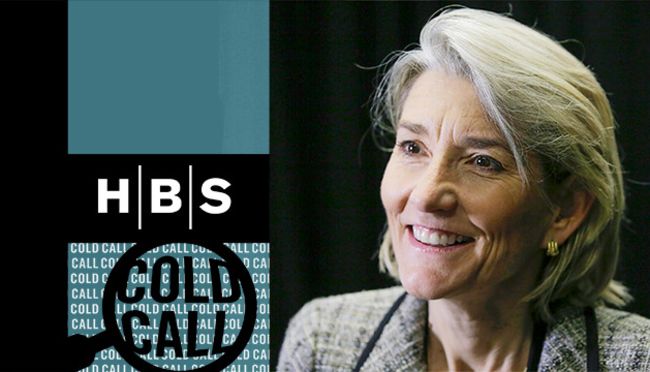
Leading a Team to the Top of Mount Everest
In a podcast, Amy Edmondson describes how students learn about team communication and decision making by making a simulated climb up Mount Everest. Open for comment; 0 Comments.
- 26 Aug 2016
- Working Paper Summaries
Unpacking Team Diversity: An Integrative Multi-Level Model of Cross-Boundary Teaming
In a growing number of cases, cross-boundary teams span organizational boundaries, not just functional ones. This paper explores how newly formed temporary groups may be able to develop rapidly into high-performance teams. The authors integrate research streams on team diversity and knowledge boundaries, and present a framework that considers the kinds of specific knowledge boundaries that must be spanned to achieve high-level, cross-boundary teaming.
- 09 May 2016
- Book
‘Big Teaming,’ Audacious Innovation, and the Uncompleted Dream of a Smart City
How do you organize a project that spans professions, industries, and even nations? A new book by Amy Edmondson and Susan Salter Reynolds describes the approach of 'big teaming' with a case study of a high-profile smart city. Open for comment; 0 Comments.
Do Leaders Learn More From Success or Failure?
There's so much to learn from failure, potentially more than success, argues Amy Edmondson in a new book. James Heskett asks whether the study of leadership should involve more emphasis on learning from failure? Open for comment; 0 Comments.